

Our Newsletter
Stay up to date with news, tips, advice and updates from the community.
Thank you! Your submission has been received.
Oops! Something went wrong while submitting the form.

© Toddlers By Jenna Pty Ltd




New Baby / Siblings
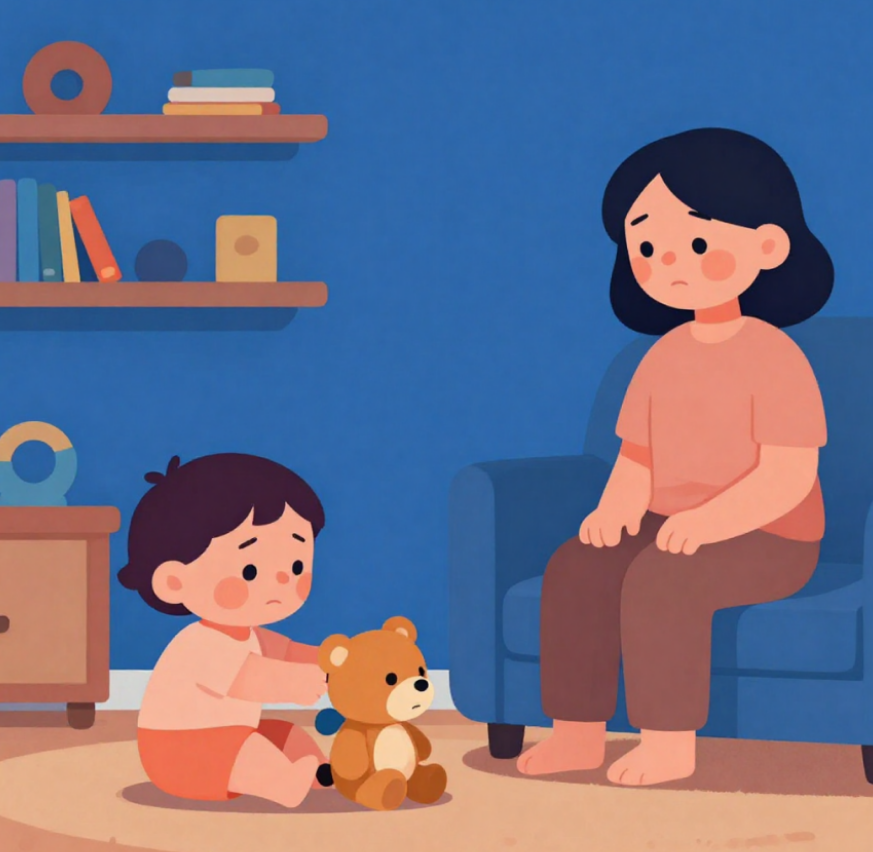
Sibling conflict isn't a parenting failure or a problem to solve, it's how young children test boundaries, communicate feelings, and learn to navigate having someone else in their world. Rushing in to referee every squabble teaches the 'victim' they can't cope and teaches the 'aggressor' they're the bad one, when usually neither label is accurate. Stepping back, while still stopping anything genuinely unsafe, lets kids build real resilience and lets the relationship find its own rhythm.
I know. That title probably made you do a double take. Do nothing? When your toddler has just snatched a toy from their little sibling for the fourth time in ten minutes, and the screaming has reached a frequency that only dogs can hear, doing nothing feels like the most impossible suggestion in the world.
But stay with me, because this is one of the most important shifts in thinking I share with parents, and it genuinely changes things.
The first thing to understand is that siblings fighting is not a sign that something has gone wrong. It is not a failure of your parenting, a reflection of your children's character, or a warning about the relationship they will have as adults. It is simply what siblings do, especially in these early years.
Conflict is actually one of the primary ways young children interact with and figure each other out. It is how they test boundaries, assert their needs, express the complicated feelings they carry about sharing their world with another person, and learn what the other person is made of.
When your older child grabs your younger child's toy, they are not just being naughty. They are communicating something, exploring something, and yes, connecting in the chaotic, unfiltered way that toddlers do.
I have watched this play out so many times, including with my own two girls.
Just recently I was on the verge of stepping in during what felt like an endless bath-time argument, when suddenly, before I'd even moved, they were laughing together and splashing and having the best time. The fight had done its job and they had moved right through it and out the other side, without any help from me at all.
Here is the problem with intervening every time your kids clash. When you rush in to rescue the 'victim, you are sending two messages simultaneously, and neither of them is helpful.
To the 'victim', you are communicating that they are not capable of handling this themselves. That they need saving.
But children are far more resilient and resourceful than we give them credit for. Given the chance, they figure out how to hold on tighter, push back, or simply move on to something else. These are genuinely valuable life skills, and they only develop through practice.
To the 'agressor', constant intervention sends an equally damaging message: that you see them as the aggressor, the bad one, the one who always gets in trouble. And when a child already feels in competition with their sibling, that message lands hard.
It confirms their fear that you love their sibling more. It adds shame to an already complicated set of emotions. And it often makes the behaviour worse, not better.
A self fulfiling prophecy begins as both internalise their asigned labels of 'victim' and 'agressor'.
The other really important thing to remember is that the child who is crying the loudest and who will undoubtedly get your sympathy and attention is not always the one who is innocent in the conflict. It's often impossible for you to make an accurate assessment of who is 'right' and who is 'wrong' in the situation.
Parents often only catch the last tiny part of the conflict that eventuated in tears- but there usually has been a substantial lead up that happened before this which makes it very difficult to even know who 'started it'. Therefore, it's best to keep
I want to be really clear about something. Stepping back does not mean ignoring your children or letting them harm each other.
If someone is genuinely getting hurt, you step in, calmly and without drama. If your older child keeps taking every single thing their sibling touches and cannot move on from it, a gentle redirect or even a firm boundary makes sense.
But for the everyday squabbling, the toy snatching, the pushing, the "that's mine!" moments that pepper every single day with two small children? Let it unfold. Take a breath. Watch what happens.
What often happens is that they sort it out. Or they get distracted and forget what they were fighting about. Or the younger one surprises everyone, including the older one, by standing their ground in a way nobody expected.
These moments of self-resolution are gold. They are quietly building your children's capacity for assertiveness, negotiation and resilience.
If a child runs to you upset, the most useful thing you can do is narrate neutrally rather than assign blame. "Your brother really wanted that toy" or "your sister pushed you and that hurt" gives words to what happened without making one child the villain and the other the victim.
And if they are old enough to engage, you can gently turn it back to them: "Hmm, you both want the red car and there's only one. I wonder what you two could do?" or my favourite response to any kind of tattle tailing - "I trust you two to figure this out by yourselves"
Something I've noticed with my own children as well as from other parents' reports - is that if one child is in a bad mood, or feelinge extra sensitive or 'spicy' - you can be guaranteed there will be more siblings fights.
If you feel like the fighting is endless and your child is in no mood to move on, it's ok to encourage some space between the children in a way that doesn't shame or blame anyone. "Your sister's having a hard time this afternoon, why don't you come and help me in the kitchen while she works on her puzzle" And then let them naturally come together once they're feeling more settled.
My older daughter spent a solid period of time pushing, pinching and taking things from her younger sister. It drove me absolutely mad.
But when I backed off and stopped rushing in to manage every interaction, something shifted. They started to find their own rhythm.
The fights still happened, but they moved through them faster. And the moments of genuine warmth and connection between them became more frequent. When I expected the fights and reminded myself that this is a normal and healthy part of their developing relationship, it helped me to stay calm and unbothered by it all.
Taking a step back is almost always the best thing you can do for your children's relationship. The sibling bond is formed in the messy middle of all of this, not in spite of it. Trust the process, trust your kids, and put down the referee whistle.
For more help, browse my new baby and siblings guides, or book a 1:1 consult.
Stay up to date with news, tips, advice and updates from the community.