

Our Newsletter
Stay up to date with news, tips, advice and updates from the community.
Thank you! Your submission has been received.
Oops! Something went wrong while submitting the form.

© Toddlers By Jenna Pty Ltd




Mealtimes
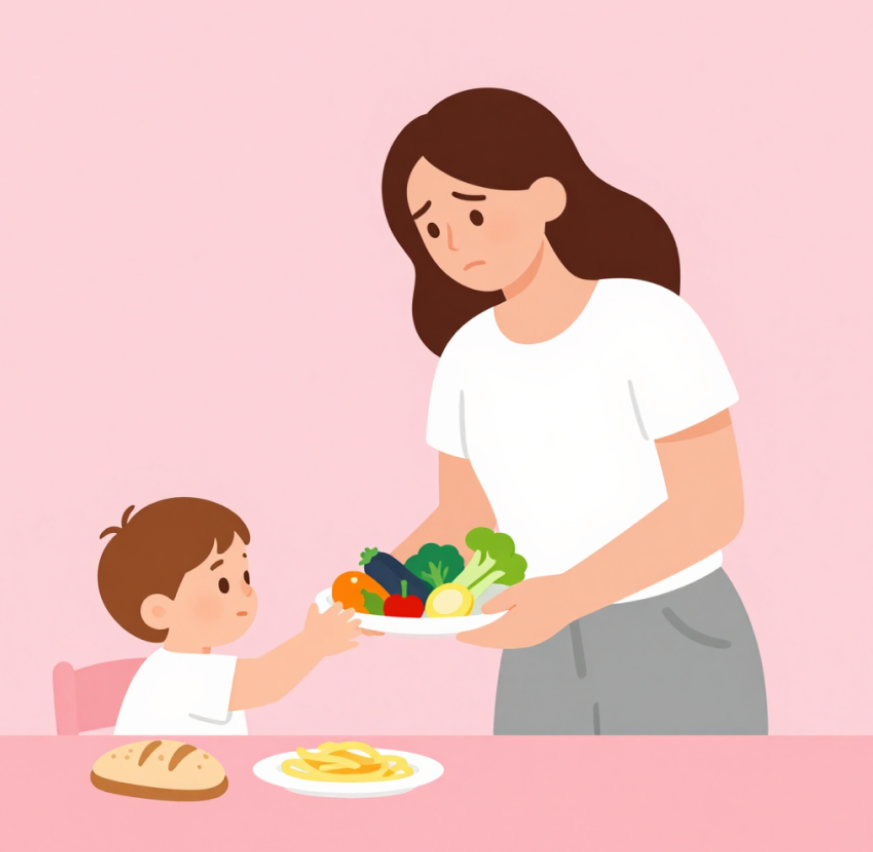
The beige diet (plain pasta, bread, crackers, cheese) is a normal stage driven by a toddler's need for control, a changing palate, and a love of predictability. Keep safe foods in rotation, always include one "yes" food, offer fruit or yoghurt as a standard second course, keep serving everything else pressure-free, and judge the week, not the meal.
Plain pasta. White bread. Crackers. Cheese. Plain rice. Nuggets. Repeat.
If this sounds like your toddler's current food rotation, welcome to the beige diet stage. You are absolutely not alone, and I promise it is not a reflection of your cooking or your parenting. It is one of the most universally shared toddler experiences there is, and understanding why it happens is the first step to getting through it without losing your mind.
There are two things going on when toddlers narrow their food choices down to a limited, beige palette, and both of them are completely developmentally normal.
The first is about control. The toddler years are defined by a drive toward autonomy, and food is one of the most powerful arenas where toddlers can exercise control. They cannot decide when they go to sleep, when they leave the park or when they have to get dressed, but they can decide what goes in their mouth. Refusing everything except plain pasta is a very effective way of asserting that power, especially once they realise it generates a reaction from you.
The second reason is biological. During the toddler years, a child's taste palate changes in ways that can genuinely make previously enjoyed foods taste different. Many vegetables and complex flavours contain natural bitter compounds that become more pronounced to toddlers at this age. So the bolognaise your toddler used to happily eat is now full of suspicious flecks and unfamiliar bits that their nervous system is telling them to treat with caution. From an evolutionary standpoint, this makes complete sense: at this developmental stage, toddlers become biologically primed to examine their food more carefully to determine whether it is safe. It is the reason your toddler can detect a single piece of onion buried in a sauce that took an hour to make.
Toddlers also love predictability and sameness. It helps them feel safe. Beige foods tend to taste the same every time: no variation, surprises or new tastes or textures to deal with. Think of the beige foods as your toddler's mealtime security blanket. They can always rely on plain pasta, rice and crackers to get them through the day!
Knowing this doesn't make dinner any less frustrating, but it does make it easier to take it less personally and have a bit more empathy for your toddler.
When your toddler only wants plain pasta, the temptation is to either give them only plain pasta every night (because at least they're eating something) or to remove it entirely as a way of forcing them to eat more variety. Neither approach serves you well in the long run.
Instead, keep the familiar "safe" foods in rotation alongside the other components of the meal. Serve the pasta, but also serve the bolognaise in a small cup on the side so they can pour it on themselves if they choose. Bring the sauce to the table in a communal bowl so they can see you adding it to your own plate. Keep the familiar food present without making it the only option, and keep the other components present without making them mandatory. This low-pressure exposure is what slowly builds familiarity over time.
When you're planning meals during the beige phase, make sure there is at least one thing on the plate that you know your toddler will eat. This is not giving in, it is strategic. It gives your toddler something safe to anchor to while the other components of the meal sit nearby doing their quiet work of becoming familiar.
It also takes the pressure off the whole meal. When you know they have something they'll eat, you can relax. And a relaxed parent at the table makes an enormous difference to how the meal unfolds.
One of the most practical mealtime strategies I recommend, especially during the beige phase, is to always offer fruit or yoghurt as a consistent second course, regardless of how much or how little your toddler has eaten of the main meal.
This is not a reward for eating. It is simply a reliable, predictable part of the meal structure. It gives you peace of mind that something nutritious is going in, it removes the urgency to force the main meal, and it gives your toddler the security of knowing that something familiar and enjoyable is coming. Keep the main meal on the table while the second course is served, because you will often find your toddler goes back and forth between the two once they've relaxed into the fruit.
This is the one that requires the most trust. You need to keep putting the food on the table even when you know they will not eat it. Not on their plate if that triggers a meltdown, but on the table, in a communal bowl, or on your own plate where they can see it. Repeated, low-pressure exposure to a food over many meals is the most evidence-backed strategy for eventually getting a toddler to accept it.
Any interaction counts. Your toddler touching a piece of broccoli and pushing it aside is a step. Smelling something is a step. Watching you eat it is a step. These incremental moments of familiarity are building a quiet pathway toward eventually tasting and accepting that food. It is a long game, but it is the right one.
Toddlers are far more likely to interact with food they have had some involvement in. Letting them help wash the vegetables, stir something at the stove, carry a bowl to the table, or sprinkle cheese on top gives them a relationship with the food before it lands on the plate. They have touched it, handled it, and made some choice about it. That is meaningful exposure, even if they don't eat a single bite.
During the meal, if they object to something on their plate, turn it back to them: "Hmm, what do you think might make that taste better?" Let them problem-solve. Let them add the sauce, remove the bits they don't want, or push things around. The more agency they have, the less they need to exercise that control through refusal.
I know how tempting it is to reach for the safety net of a backup meal when your toddler pushes the dinner away. But once you start offering an alternative, you set a precedent that is very hard to walk back. Your toddler learns that refusing the meal is an effective strategy for getting what they want, and the refusals become more entrenched over time.
The phrase to reach for is: "That's not on the menu tonight. This is what we're having." Then leave the food there, eat your own meal, and keep the energy relaxed. You may be surprised how often a toddler who declared they hated dinner quietly starts eating once the pressure lifts and you stop watching.
If they truly don't eat the main meal, that is what the fruit and yoghurt second course is for. And on the very rare night where they barely eat anything, know that one missed dinner will not affect their health or their sleep at this age. Trust their body to tell them what they need. (Don't report me, but I once accidentally put my kids to sleep without eating dinner and guess what... they slept the whole night without a peep!)
When your toddler eats mainly beige food for three days in a row, it is easy to spiral into worry about nutritional deficiencies. But toddler nutrition needs to be assessed across a week rather than meal by meal. Most toddlers balance out their intake across the week in ways that are more adequate than they appear in any single sitting.
It also helps to remember that many beige foods are not nutritionally empty. Bread, pasta, rice and cheese all provide carbohydrates, protein and calories that a toddler body genuinely needs and uses. Plain pasta is not a nutritional disaster. It is a completely reasonable part of a toddler's diet, especially when fruits and dairy are also in the mix.
Research consistently shows that children whose parents sit and eat the same food as them at mealtimes are more likely to try a wider variety of foods and are easier to feed overall. You are your toddler's most powerful food role model. When they watch you eating the bolognaise with genuine enjoyment, something registers. Not today, probably, but over time.
So sit down with them as often as you can. Eat what they are eating. Put on some music, keep the conversation light and off the topic of food entirely. Make the table a place they want to be.
The beige diet stage does not last forever. I think back to how simply I ate as a child (think toasted cheese and tomato with no cheese) and look at how broadly and adventurously I eat now. The same will be true for your toddler. What you are building right now is not just a short-term survival strategy. You are laying down the foundations of a child who grows up with a relaxed, positive and curious relationship with food. That is the real long game, and it is absolutely worth playing.
For more mealtime help, read Why Has My Toddler Become Fussy At Mealtimes?, browse my mealtime guides, or book a 1:1 consult.
Stay up to date with news, tips, advice and updates from the community.