

Our Newsletter
Stay up to date with news, tips, advice and updates from the community.
Thank you! Your submission has been received.
Oops! Something went wrong while submitting the form.

© Toddlers By Jenna Pty Ltd




Playtime
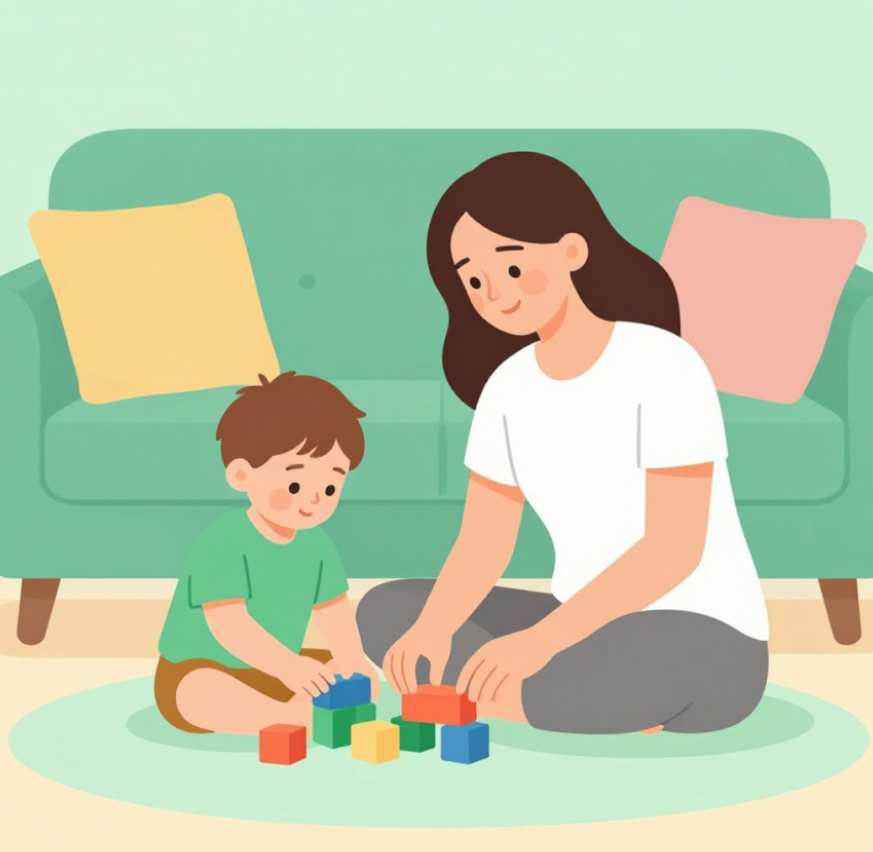
Play isn’t just building cognitive or language skills, it’s how toddlers process big feelings and hard experiences. Toys around hiding, finding, and separation help them work through daily goodbyes, pretend play lets them feel in charge of situations where they usually have no control, and simply sitting back and observing, rather than directing, shows you what’s really going on for them emotionally.
As many have written before, play is the ‘work’ of children. For toddlers, play is their primary method for learning in every way. There is no such thing as too much play, and children benefit from play in all developmental realms. While of course children are developing their language skills, problem solving, math, creativity and social skills during play; it is their emotional development that I believe is the most important.
This excerpt from Barbra Bieber (1951) provides great insight into the role of play on helping children process their emotions. She wrote; “The chance to express negative feeling through play can save the child considerable anguish. The dolls he is allowed to hit leave him more able to face his real life troubles successfully. But there is the positive aspect of a child’s emotional life which should not be overlooked. Covering the doll lovingly with layers of blankets is as deep and important an experience as the smacking and the spanking”.
When parents are buying or selecting toys for their toddler, it is important to consider not only the cognitive and educational benefits of each toy, but their emotional uses too.
For toddlers, separating from their parents is a big task. There are a lot of emotions and thoughts to process, and play is a wonderful time for this exploration.
For example, in looking at a toy cash register, one might think that this would only be used for dramatic play in a pretend shopping scene, however children delight in the hide and seek element of coins disappearing into the cash register slots before being discovered in the drawer below! Toys that explore coming and going or hiding and finding help a toddler understand this concept that mommy and daddy go away and they come back.
Another example is sunglasses - appearing on the surface to be a fun addition to dress up items, they allow children to hide away and be discovered, as well as making them feel like they are entering the adult world by wearing sunglasses like ‘mommy/daddy does’.
A popular game that toddlers like to play for processing separation is called the ‘leaving game’ whereby they take on the roll of parents and they are the ones leaving you behind. They might say “you be the baby, and cry” as they pretend to go to work, returning moments later and giving you a big hug!
During play, toddlers are in charge and they set the rules. Whereas in their day to day life children are often powerless to the adult world, as they are told when to go to sleep, how to eat their meal and how to behave at a restaurant.
During play, toddlers are the boss, and they can explore scenarios at their own pace, helping them figure out their feelings about big experiences like visiting the doctor, moving homes, a death in the family or getting a baby sibling…. and more recently being in lockdown! If there is a specific life event (or a moment in their day!) your toddler is having a hard time with, consider how you can encourage them to explore their emotions about it through play.
While it might be tempting to direct your toddler’s play, especially when you’re hoping they might learn something specific from the materials you’ve selected, do your best to sit back and follow your child’s lead. You’ll be surprised by how much insight you’ll get into their thoughts and feelings by just observing and watching what they do.
As Erik Erikson said “You see a child play, and it is so close to seeing an artist paint, for in play a child says things without uttering a word. You can see how he solves his problems. You can also see what's wrong. Young children, especially, have enormous creativity, and whatever's in them rises to the surface in free play.”
For more on the emotional side of play, browse my playtime guides, or book a 1:1 consult.
Stay up to date with news, tips, advice and updates from the community.