

Our Newsletter
Stay up to date with news, tips, advice and updates from the community.
Thank you! Your submission has been received.
Oops! Something went wrong while submitting the form.

© Toddlers By Jenna Pty Ltd




Social Dynamics
Biting is an extremely common developmental phase between one and three years old, not a sign of aggression or a discipline failure. Toddlers can't yet stop the impulse once it arrives. Respond with a short, calm "no biting," skip the forced apology and after-the-fact punishment, and instead focus on understanding the trigger underneath and slowly giving your toddler better words and tools for next time.
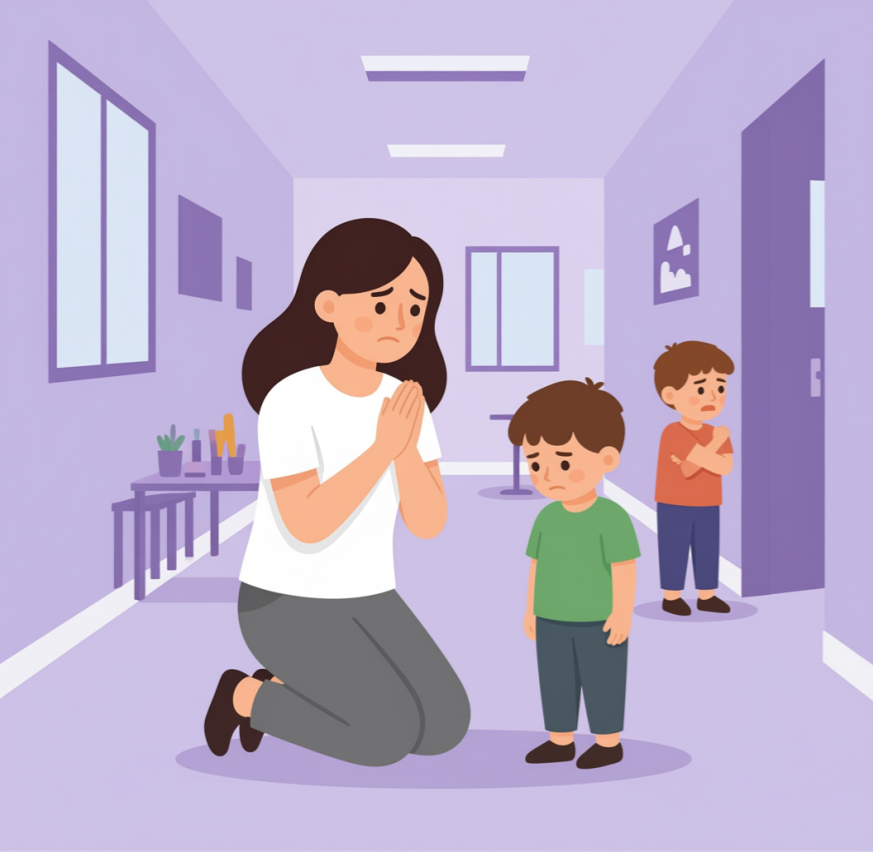
You get the message at pickup, or sometimes during the day, your phone buzzing with daycare's name on the screen. Your toddler bit another child. Maybe it's the first time. Maybe it's the third time this month.
Either way, that feeling that washes over you is awful. Embarrassment, dread about what the other parents think of you and your child, worry that something is wrong with your toddler, and sometimes a flash of anger at your own child for putting you in this position.
Take a breath. This is genuinely one of the most common things that happens in toddler rooms everywhere, and it doesn't mean there is something wrong with your child.
Biting is an extremely common phase, usually somewhere between one and three years old, and it is rarely a sign that your child is aggressive, badly behaved, or destined to be a problem. Toddlers bite for reasons that have nothing to do with malice.
They might be overwhelmed, overstimulated, frustrated that they can't get a word out fast enough, testing what happens when they do it, working through a teething sensation, or simply caught up in a big moment with another child and reaching for the most available tool their body has. Toddlers genuinely do not have the impulse control yet to stop themselves once that urge arrives. This is a developmental stage, not a discipline failure on your part or theirs.
It also tends to travel in clusters. If there's a biter in the classroom, you'll often notice a run of it for a few weeks as other toddlers pick it up, almost like it becomes the move of the moment. This says nothing about your parenting and nothing lasting about your child.
Resist the urge to launch into a big conversation about it the second you hear, especially if you're picking your toddler up in front of the other family or the teacher. A short, calm acknowledgment is all that's needed in the moment. Something like, "I heard you bit your friend today, no biting" is enough.
You don't need a lecture, a dramatic reaction, or a string of questions about why it happened. Toddlers are not able to reflect on or explain their own behaviour the way an older child might, and quizzing them about it usually just adds confusion and pressure without producing any insight.
At home later, there's no need to bring it up again unless your toddler brings it up first. Some toddlers will talk about it unprompted, almost rehashing the moment, and if that happens you can simply respond again with the same short, neutral line, "no biting." The less weight and drama you attach to it, the faster it tends to fade.
If it seems like your toddler's biting is become more frequent, it's worth a check in with their teachers. Do they have a sense of why it's happening? What situations is it happening in? What are they doing to help prevent it? How do they respond after your toddler bit someone?
It's important you're on the same page about it so that you're speaking the same language to your toddler and you're united on the plan moving forward. They might tell you that they struggle in social situations when they're fighting over a toy.
This means you can help support your toddler's skills in these moments - perhaps in a 1:1 playdate at home where there's less overwhelm, or in the playground where you can stay close and support them through these social situations before it escalates and becomes physical.
One thing worth watching for, particularly if biting has become a recurring issue in the classroom, is that too much attention on the topic can actually backfire. If your toddler is hearing about biting constantly, from teachers reinforcing the rule all day and then from you again at home, it can become a strange point of fixation rather than something that fades away.
Some toddlers start narrating it themselves, almost testing the reaction, "I bit my friend," because they've noticed how much airtime the subject gets. If you notice this happening, it's a sign to dial back how much you're discussing it and let the natural, low key response do its work instead.
It's a natural instinct to want your toddler to say sorry, especially in front of the other parent, partly because it helps you feel like you're handling things well. But toddlers at this age genuinely don't have the empathy or self awareness to produce a meaningful apology, and forcing the words out of them teaches them to perform contrition rather than actually understand impact.
Plus at this age, forcing an apology makes your child feel shame, which contrary to popular belief does not lead to improved behaviour, but rather worse. It's completely fine for you to apologise to the other parent yourself, on your child's behalf. "Sorry about that, I hope your child is ok" goes a long way and takes the pressure off everyone, including you.
There's no need for punishment after the fact, no taking away a toy, no time out once you're home. Your toddler won't connect a consequence delivered an hour later, or even ten minutes later, to the biting itself. What's far more useful is being calm and clear in the moment it happens (or hearing about it happened) and then, separately, thinking about what might be driving it.
Has there been a lot of change lately? A new sibling, a house move, a different room or teacher at daycare? Are they overtired, since exhaustion tends to lower impulse control even further? Is there a specific trigger, like feeling crowded, or frustration over a toy, that comes up again and again?
You're not looking for this to excuse the biting, you're looking for it so you can support the feeling underneath, which is usually the thing actually driving the behaviour.
Once everyone's settled, and not in the heat of the moment, it can help to gently give your toddler some language for the situations that tend to trigger biting. If it happens over toys, something like "you can say 'I want a turn'" gives them a tiny tool to reach for instead.
You're not expecting them to use it perfectly or even remember it the next time it comes up. You're slowly building an alternative pathway, one repetition at a time, between the feeling and what they do about it.
It's common for biting to spill over into home life too, sometimes even directed at you. The response is the same: a calm, immediate "no biting" and a small physical alternative if it seems like a teething or sensory need, like a teether or a chewy toy kept nearby.
If you sense it's more about frustration or anger, name that instead of focusing on the biting itself. "You're really mad that I said no" tells them you understand what's underneath it, which does more long term good than any lecture about teeth.
The vast majority of biting resolves on its own with consistent, calm handling, usually by somewhere around age three as language and self control catch up. It's worth mentioning to your pediatrician or seeking extra support if biting is very frequent, intense, seems to be the primary way your toddler interacts with others rather than an occasional release valve, or isn't easing up at all despite time passing.
That's a conversation worth having, but it's the exception rather than the rule, and most toddlers move through this phase and out the other side without it meaning anything about who they are.
A biting incident at daycare feels much bigger in the moment than it actually is in the scope of your child's development. Stay calm, keep your response short, skip the forced apology and the after the fact punishment, and put your energy instead into understanding what's underneath it and giving your toddler better tools for next time. This phase, as relentless as it can feel, does pass.
For more help, browse my social dynamics guides, or book a 1:1 consult.
Stay up to date with news, tips, advice and updates from the community.